
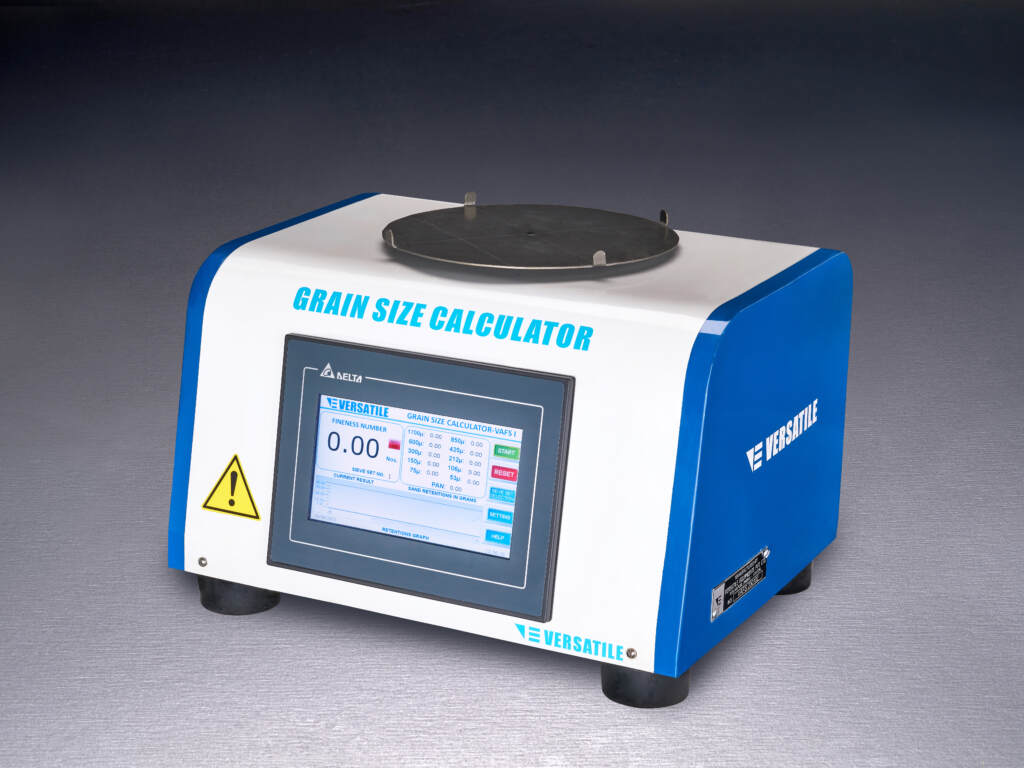
Grain Size Calculator VAFS-I
The Versatile VAFS-I Grain Size Calculator computes the AFS Grain Fineness Number and full sieve distribution from retained weights, with no manual arithmetic. Transmit to PC or print, with VSync web sync for cloud logging.
Prefer email? Write to [email protected] and mention this model.
The Versatile VAFS-I Grain Size Calculator turns sieve-analysis data into the AFS Grain Fineness Number (GFN) and a full grain-distribution report in seconds. After a sample is shaken through a standard sieve stack, the operator enters or captures the weight retained on each sieve and the VAFS-I instantly computes GFN, percentage retention and distribution, so there is less manual multiplier arithmetic and less room for calculation error.
Why the AFS grain fineness number matters
The grain fineness number characterises the average grain size of foundry sand and directly governs permeability, casting surface finish and binder demand. Tracking GFN on every incoming sand lot and every reclaimed batch keeps moulding and core sand within specification.
Weigh first, clean later
This is where the VAFS-I parts company with an ordinary shaker and balance, and it is worth following before the two are compared on price.
The usual bench routine. When shaking has finished, the operator empties each sieve onto a sheet of paper, brushes the mesh through to recover the sand clinging to it, tips that sand into a pan, weighs it, writes the figure down, and repeats for every sieve in the nest. The grain fineness number is then worked out by hand from the column of weights.
With the VAFS-I. The weight of each sieve is recorded in the machine beforehand. The operator lifts a sieve off the shaker with the sand still sitting in it, places it on the weighing platform, and the machine subtracts the stored sieve weight to give the sand retained on that mesh. Nothing is emptied onto paper and nothing is brushed out before the reading is taken. The AFS grain fineness number is computed as the sieves are placed, one after another.
Two things follow from that order of work.
- The brush comes out of the routine. Brushing a mesh to clear it is what wears the wire, and mesh wear is what eventually takes a sieve out of certification. Because the weighing is already done, each sieve can go straight into an ultrasonic bath instead of being brushed, which helps a nest stay within tolerance for longer.
- The sand is handled once. There is no paper to fold, no pan to tare and no column of figures to add up. The work per nest comes down to lifting each sieve onto the platform in turn.
A third difference follows from the same order of work, and it affects the number rather than the effort. In the manual routine, whatever stays clinging to the mesh after brushing is not weighed, so that sieve is reported a little light. Finer meshes tend to hold on to more of it. Because the VAFS-I weighs the sieve with the sand still on it, what the brush would have left behind is counted instead of lost. How much that matters depends on the sand and on how thoroughly each operator brushes, which is itself a source of variation between one person and the next.
Over a nest of twelve sieves read several times a day, the brushing avoided is the part that shows up later, in inspection and certification rather than in the test itself.
Recommended companion equipment
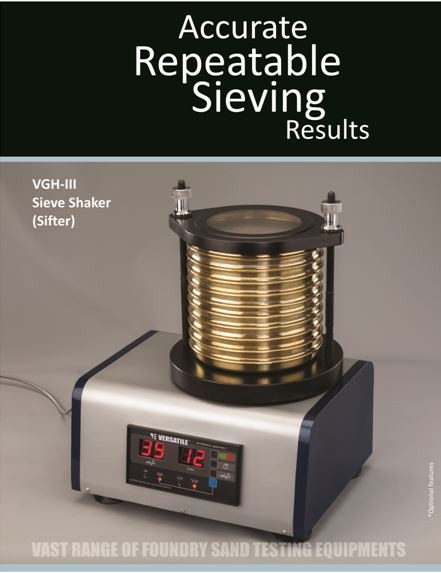
Use with a Versatile Sieve Shaker and a standard AFS sieve set to generate the retained-weight data.
Readings, in the cloud with VSync
This model works with VSync web sync, so results are logged and stored online. A supervisor can review a shift from a browser, and a service engineer can look at the same data remotely. See how VSync works →
Others in the sand lab.
Bring this instrument into your lab.
Tell us your sand types and what you test, and we will quote the right configuration and any attachments.