


A clean separation needs a repeatable shake.
Hand sieving drifts from operator to operator. The Versatile Sifter drives the whole nest with a consistent, three-dimensional vibratory motion, so the separation you get today is the separation you get tomorrow.
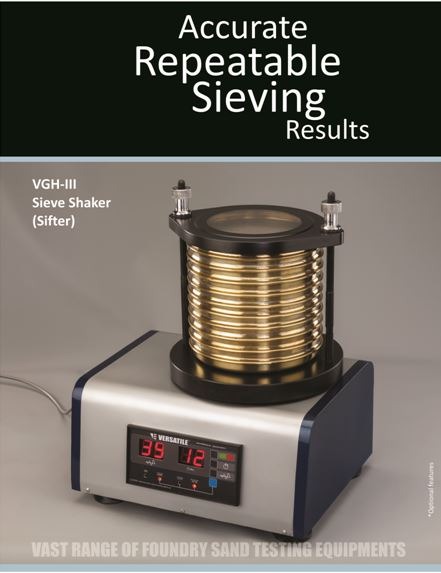
Three-dimensional motion, one clean cut.
The Sifter is a vibratory sieve shaker. It agitates the nest in a high-frequency three-dimensional motion that keeps material moving across the mesh, not bouncing on it. Grains meet the aperture again and again, so near-size particles find their way through and the fraction settles where it belongs.
- Vibratory 3D agitation for consistent, repeatable separation run to run
- Takes a full nest of 8-inch full or half height sieves
- Timed run at a set amplitude, stopping on its own, so every analysis sees the same agitation
- Broad materials from foundry sand to fine powders
- Dry or wet sieving, for material that will not release its fines dry
The shake is part of the method.
Two labs with the same sieves and the same sample can report different distributions if they agitate differently. Mechanical, timed shaking takes the operator out of the result.
Same shake, every run
A set motion and a set time mean the agitation is a constant, not a variable, from one analysis to the next.
Carries to completion
Sustained motion carries near-size grains to the aperture, so the separation reaches completion instead of stalling half-way.
Kind to the mesh
Even, distributed motion works the whole cloth rather than hammering one spot, which helps a calibrated sieve hold its aperture.
Efficiency is reaching the end-point, not running longer.
The sieves set the apertures. The shake decides whether a grain of a given size actually reaches the aperture it belongs to. Under-shake, and coarse grains sit a screen too high; over-shake, and grains attrit into false fines while the mesh wears. An efficient separation carries to its natural end-point, where more time changes almost nothing, and holds there.
Present each grain to the aperture
A three-dimensional throw lifts and re-presents grains from changing angles, so near-size particles find the opening rather than blinding it. A flat, single-plane slide leaves grains riding the cloth, and the cut reads coarse.
Do not bury the mesh
A screen carrying too much sample cannot present its grains to the cloth. Holding each cut within the depth the method allows is one of the simplest ways to lift efficiency, and a common reason two labs on the same sample disagree.
Shake to completion, not to a guess
Run, weigh, then run one short extra interval. When the change on each screen falls below the limit the standard sets, the separation is complete. A single fixed time under-shakes a heavy cut and over-shakes a light one.
The Sifter drives the whole nest in a timed, three-dimensional motion, so each analysis reaches the same end-point the same way. That is what makes a distribution worth comparing, run to run and lab to lab, and what feeds a dependable grain fineness number.
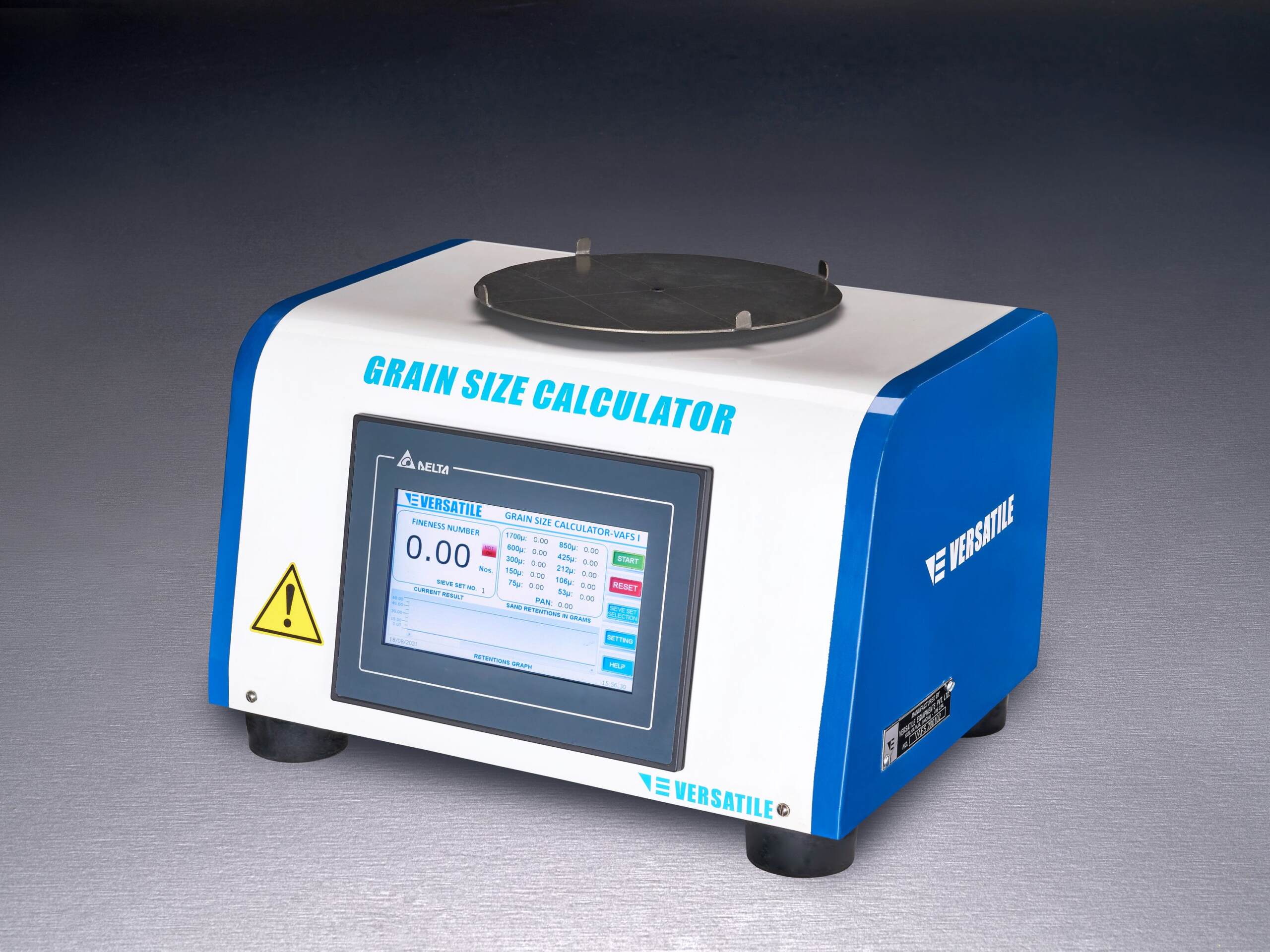
Pair a shaker with a certified nest.
Specify the Sifter with a matched set of certified sieves and a receiver, and run a method that holds up to an audit. Tell us your material and throughput.