
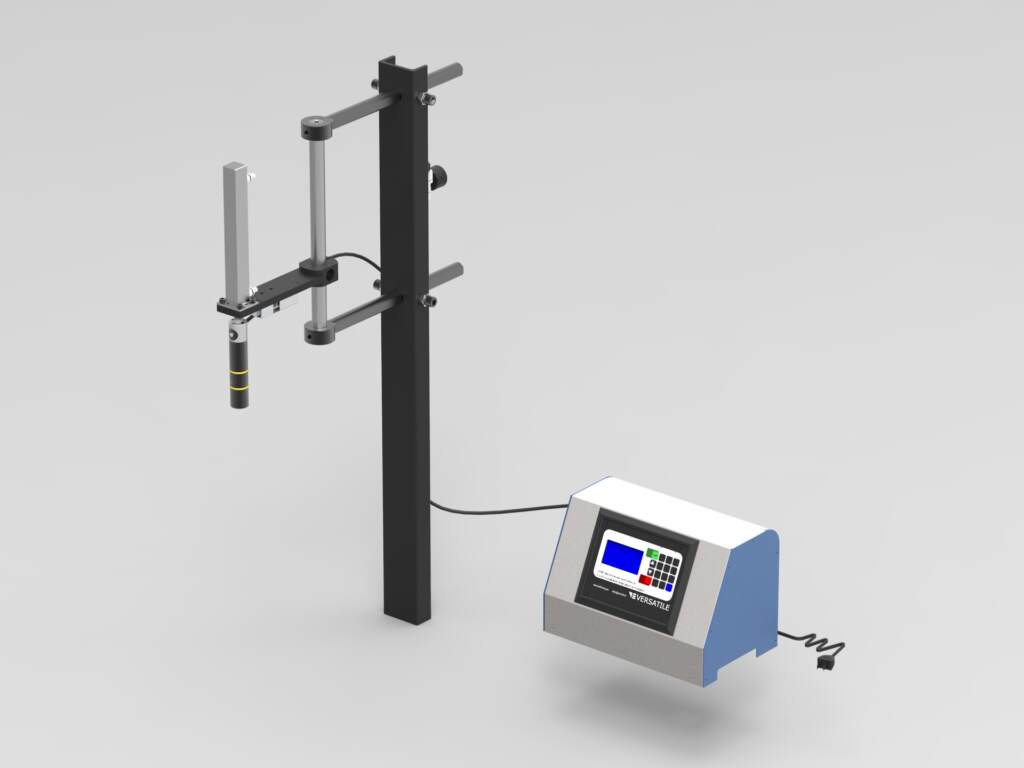
Online Mould Permeability Probe VPRP
The Versatile Online Mould Permeability Probe VPRP measures the relative permeability of the mould on the moulding line, not at the bench. Back-pressure through the sand is read in mm water column to 1 mmWC and converted to a permeability number: 2450 down to 36 on the large orifice, 49 down to 1.1 on the small. Alarm output for readings outside your limits, with readings sent on by Ethernet, V-Sync cloud or your own in-plant server.
Prefer email? Write to [email protected] and mention this model.
Technical specifications
Measured on the line, not at the bench. The probe reads the mould itself as it passes, so permeability is known before metal is poured rather than after a casting is cut open.
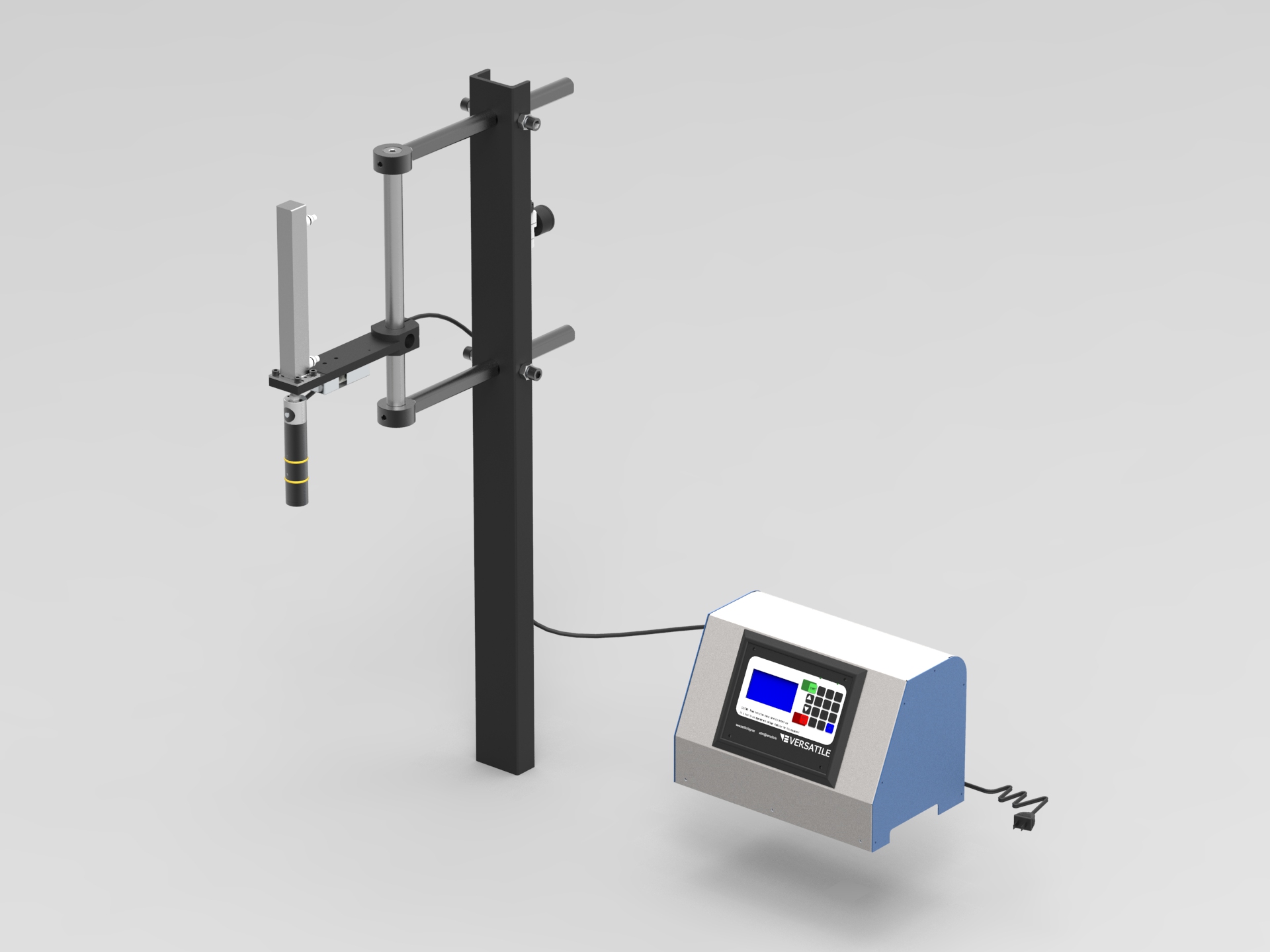
The Versatile Online Mould Permeability Probe VPRP measures the relative permeability of the mould directly on the moulding line. The probe head seats on the mould surface, air is passed into the sand, and the resistance to that air flow is reported as a permeability number. It can be configured to take a reading from every mould as it passes.
Low mould permeability is a common cause of gas defects such as blowholes and pinholes. Where a reading falls outside the limits you set, the hooter output is triggered so the mould can be dealt with on the line rather than in the fettling shop.
How the measurement works
Air is passed through the probe head into the mould. The sand resists that flow, and the resistance appears as a back-pressure, measured in millimetres of water column (mmWC) and resolved to 1 mmWC. The controller converts that back-pressure into a permeability number using the standard AFS permeability chart.
Because the number is derived from back-pressure, the two move in opposite directions. Open sand passes air easily, so back-pressure is low and the permeability number is high. Tight sand holds the air back, so back-pressure is high and the number is low. This is why the ranges below are written from high to low.
The two orifices
Air leaves through one of two interchangeable orifices. Which one is fitted sets the part of the scale the probe reads:
| Large orifice | Permeability 2450 down to 36, across a back-pressure of 4 mmWC to 88 mmWC |
|---|---|
| Small orifice | Permeability 49 down to 1.1, across a back-pressure of 20 mmWC to 98 mmWC |
The large orifice covers the open end of the scale and suits most green sand moulding; the small orifice covers the tight end, for sand that passes very little air. Between 36 and 49 the two overlap, so either orifice will give a reading in that band.
Relative, not absolute
This probe reports relative permeability. It reads the mould where it stands, so no specimen is prepared and none is required. A standard AFS permeability number is measured on a rammed specimen of known height and diameter, and a mould is neither.
The practical consequence is worth stating plainly: figures from the probe should be trended against themselves and against your own limits, rather than compared directly with bench figures taken on a rammed specimen. Both are read from the same AFS chart, but they are taken on different things. Where an absolute figure on a standard specimen is wanted, the bench instrument below does that.
Mounting and line I/O
A complete installation is usually made up of the probe, a pneumatic accessory that lowers it onto the mould and lifts it clear, a mounting stand, and, where the reading has to be seen from a distance, an extended display. The pneumatic accessory, the stand and the extended display are optional and are quoted separately.
The controller carries the I/O needed to work on a moving line without a separate PLC:
- Three digital outputs: one to lower the probe, one to retract it, one for the hooter or alarm.
- Two digital inputs: for the proximity switches that tell the controller where the mould is.
A rejection attachment can be supplied as an option where moulds outside limits are to be taken off the line automatically.
Where the readings go
Every reading appears on the built-in display and can be sent onward three ways:
- Cloud: uploaded and stored through V-Sync.
- Your own server: VSync Local Server keeps the readings on one PC inside the plant, for foundries that would rather their data did not leave the site.
- Extended display: the live figure repeated on a second screen where the moulders can see it.
Connection is by Ethernet (RJ45).
What is supplied
Included: the mould permeability probe, a calibration certificate and the instruction manual.
Quoted separately: pneumatic accessory, probe mounting stand assembly, data interfacing accessories, integrated local server, HDMI display-out module, extended display and rejection attachment.
Calibration
Calibration is recommended at least once a year, using the rubber-boss type permeability calibration kit: VKPC for the small orifice or VKPD for the large orifice, with the seal. Readings are traceable to the manufacturer’s standards. No testing standard is claimed for this instrument.
Testing at the bench
Where a prepared specimen is tested in the laboratory rather than the mould on the line, the Digital Permeability Meter VPD II with the Mould Perm Tester VPR attachment covers the same measurement on a standard specimen.
Specifications and design may change without prior notice. Images are representative; the equipment supplied may differ and may not include the optional accessories shown.
Readings, in the cloud with VSync
This model works with VSync web sync, so results are logged and stored online. A supervisor can review a shift from a browser, and a service engineer can look at the same data remotely. See how VSync works →
Others in the sand lab.
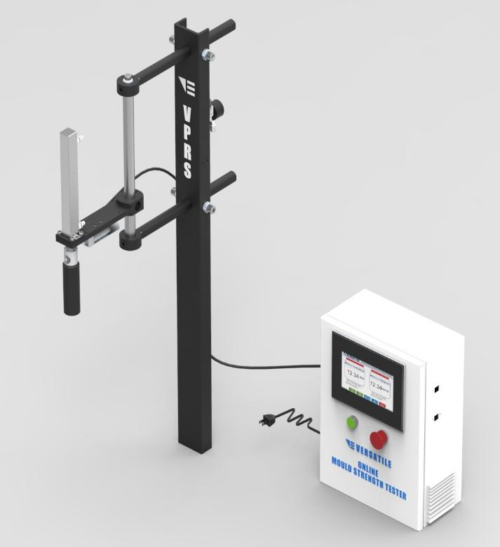
Online Mould Strength Tester VPRS
The Versatile Online Mould Strength Tester VPRS measures mould strength on the moulding line,...

VCAT-II Online Compactability, Moisture, Permeability & Mould Strength Testing System
The Versatile VCAT-II tests green sand in-line at the moulding machine: compactability, moist...
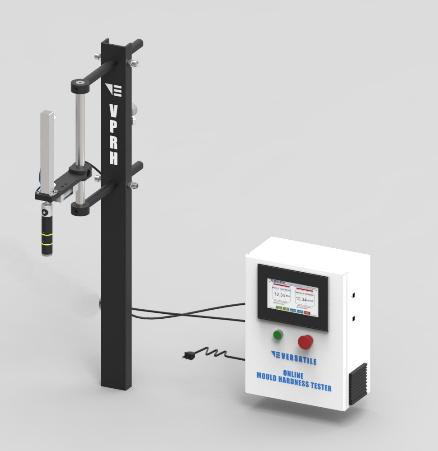
Online Mould Hardness Tester VPRH
The Versatile Online Mould Hardness Tester VPRH measures mould hardness on the moulding line,...

VCAT-I Online Compactability and Moisture testing Equipment
The Versatile Vcat-i Online Compactability and Moisture testing Equipment is a professional f...
Bring this instrument into your lab.
Tell us your sand types and what you test, and we will quote the right configuration and any attachments.